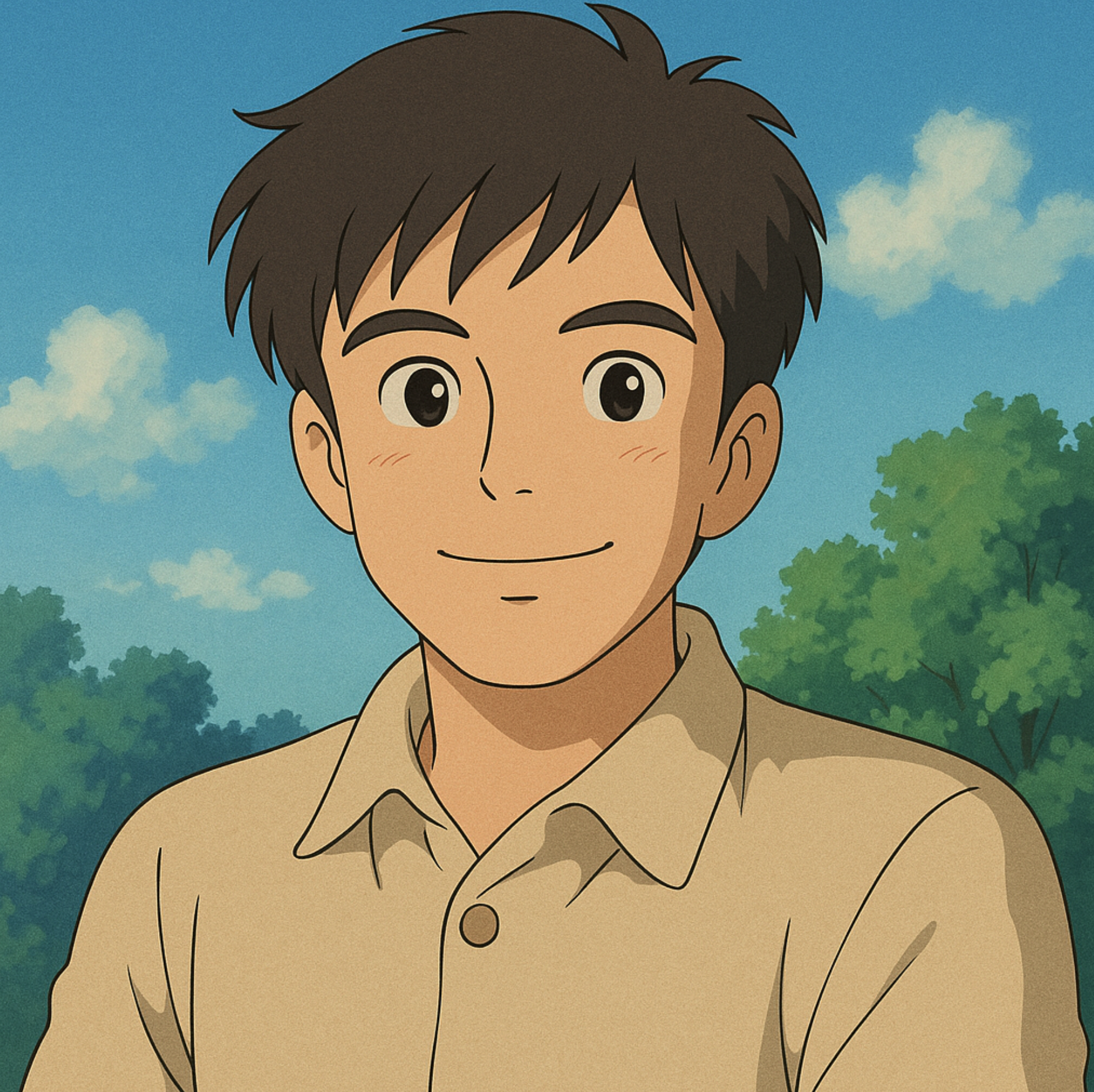
I asked ChatGPT to put "Grand Opening" on a poster — and it actually did it. Cleanly. No typos, no garbled nonsense. Here's the thing — that used to be impossible. Back in the DALL-E days, asking for text in an image was basically a coin flip on getting alien hieroglyphics. Then in March 2025, OpenAI built image generation natively into GPT-4o, and everything changed. A million users flooded in within the first hour, and Studio Ghibli memes took over the internet.
What Is It?
The old ChatGPT image pipeline worked like a relay race. You'd type a prompt, GPT-4 would interpret it and hand it off to a separate DALL-E model, which would generate the image and pass it back. Two models, one handoff.
GPT-4o's native image generation is a completely different animal. One model handles both language and image creation directly. Just like a language model generates text token by token, GPT-4o generates images the same way — using an autoregressive approach. That's a fundamentally different architecture from DALL-E's diffusion-based method.
Why does this matter? Because the model genuinely understands what it's drawing. DALL-E handled prompts through pattern matching. GPT-4o draws on conversational context, world knowledge, and memory of previous images all at once. Tell it "change only the background color from that poster we just made" — and it'll do exactly that, leaving everything else intact.
That unlocks things like:
What Changes?
Let's put DALL-E 3 and GPT-4o native image generation side by side. Same company, completely different approach.
| DALL-E 3 | GPT-4o Native | |
|---|---|---|
| Architecture | Diffusion model | Autoregressive model |
| Integration | External model call (relay) | Native (omnimodal) |
| Text rendering | Frequent errors and typos | Near-perfect (English) |
| Photo realism | 62% | 87% |
| Iteration | Regenerates from scratch each time | Incremental edits via conversation |
| Generation speed | 20–45 seconds | 60–180 seconds |
| Max objects | ~5 | 10–20 |
| Context awareness | Prompt only | Full conversation + uploaded images |
| API model name | dall-e-3 | gpt-image-1 |
| API image price | $0.04–$0.08/image | $0.04–$0.17/image (by quality tier) |
DALL-E wins on speed, but GPT-4o dominates in pretty much every other dimension. OpenAI even acknowledged it directly: "It's much slower, but the quality is unbelievably good — worth the wait." By March 2025, DALL-E 3 had been replaced as ChatGPT's default image generation model.
Here's how it stacks up against other AI image tools:
| Model | Company | Text Rendering | Core Strength | Pricing |
|---|---|---|---|---|
| GPT-4o (gpt-image-1) | OpenAI | Best-in-class | Conversational editing, context awareness | $20/mo or API |
| Midjourney v7 | Midjourney | Average | Artistic style, aesthetics | $10–$30/mo |
| Imagen 3 | Very strong | Speed (4–6 sec), multilingual | Free–$0.067/image | |
| FLUX 2 Max | Black Forest Labs | Strong | Product photography, open source | $0.05/image |
| Ideogram 3 | Ideogram | Very strong (~90%) | Graphic design, typography | Free–$7/mo |
Key Takeaway: How marketing teams should use each tool
Social media creatives → GPT-4o (iterate on text-heavy assets through conversation)
Brand campaign visuals → Midjourney (artistic polish)
Bulk banners & thumbnails → Imagen 3 (speed + cost)
Product mockups & packaging → FLUX 2 Max (realistic product photography)
Logo & typography-forward design → Ideogram 3 (built for text)
The real shift GPT-4o brings to marketing workflows is this: the cost of iteration drops to almost zero. Before, every round of "can you tweak the text?" or "adjust the color palette" meant time and money. Now you type "make the background blue and increase the headline size" in ChatGPT, and a new version is ready in 30 seconds.
Heads Up: Speed and limitations
GPT-4o image generation is 2–4× slower than DALL-E. A single image can take 60–180 seconds. Text rendering for non-Latin scripts (Korean, Japanese, Arabic, etc.) still isn't perfect — you may get inaccurate or hallucinated characters. Also, every generated image gets C2PA metadata embedded, so AI origin is traceable. Keep that in mind for commercial use.
Getting Started
- Jump in directly via ChatGPT
Go to chatgpt.com and ask for an image — GPT-4o is now the default generation model. Free users can access it (with rate limits). A Plus subscription ($20/mo) gives you faster generation and higher limits. - Generate images with text in them
Be explicit. Try something like: "A minimal café opening poster with the text 'Grand Opening — March 25'." Wrap the exact text you want in quotes for better accuracy. Keep non-English text short for best results. - Iterate through conversation
Not happy with the first result? Just say "make the background brighter," "shift the logo to the right," or "give the whole thing a warmer tone." It remembers the previous context, so your edits stay consistent. - Edit existing images
Upload a photo and ask: "swap out the background," "put this product on a white background," or "turn this sketch into a realistic image." It reads what's in the uploaded image and edits accordingly. - Automate with the API (developers)
Use model namegpt-image-1via the OpenAI API to automate image generation. Standard quality runs $0.04–$0.05 per image; HD quality is $0.08–$0.12. Great for bulk marketing asset production or dynamic thumbnail generation.