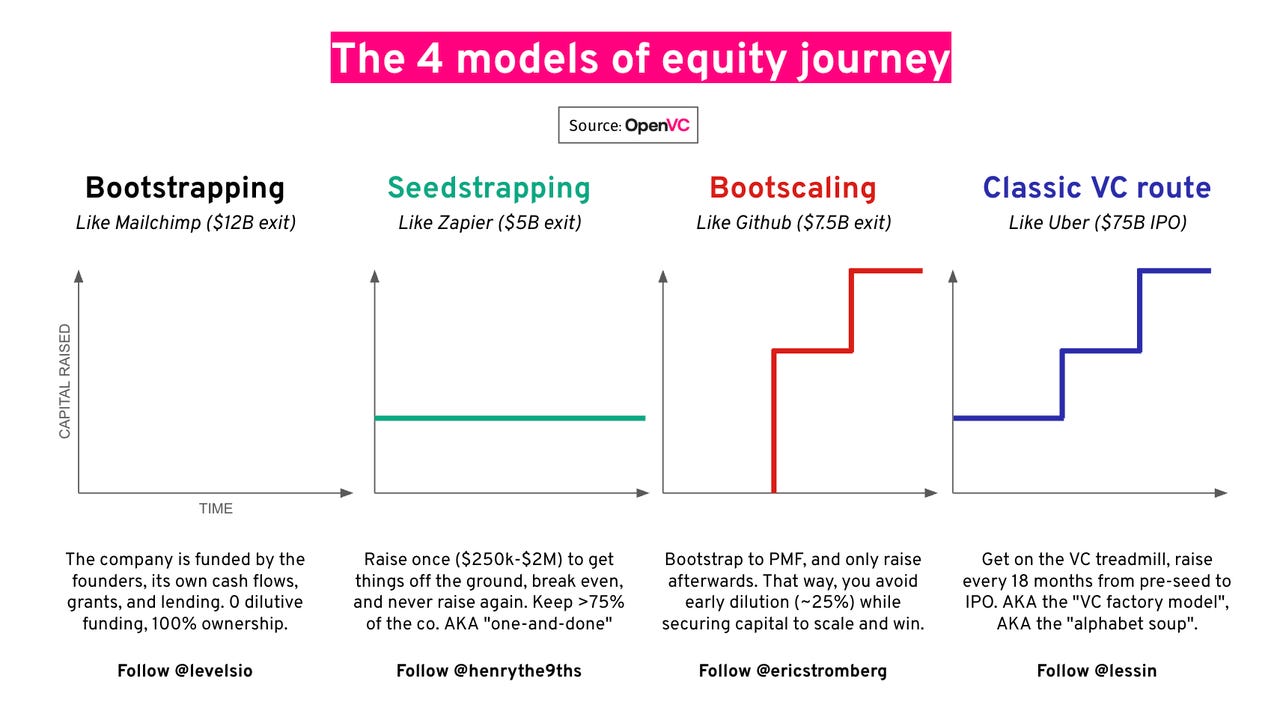
VC-funded startups hitting $10M ARR in 30 days — you see these headlines everywhere. levelsio (Pieter Levels) pulled back the curtain on these numbers. There's a structure behind the flashy growth that most people miss.
What Is This?
levelsio is an indie developer who failed 70+ projects before hitting $100K+/month with Photo AI and $1M ARR in 17 days with fly.pieter.com. Zero VC money. And now he's questioning the mechanics behind VC startups' rapid ARR growth: "This is how (some) VC-funded startups get to that $10M ARR in 30 days".
The core insight: when VC money enters, the rules of the game change. You can burn millions on marketing, hire aggressively, and run at a loss to grab market share. ARR numbers climb fast — but those numbers don't necessarily mean a healthy business.
The bootstrapping vs VC debate isn't new, but 2026 context changes everything. Thanks to AI tools, a solo developer can match the output of a 50-person team. Developers like levelsio, Tony Dinh, Danny Postma, and Marc Lou are all hitting $1M+ ARR without VC.
What Changes?
| VC Funding | Bootstrapping | |
|---|---|---|
| Equity | 50-80% dilution | 100% retained |
| Growth | Aggressive, fast | Organic, slower but healthy |
| Decisions | Board approval needed | Complete freedom |
| Exit pressure | Required in 7-10 years | None — sell when you want |
| Profitability | Growth first (losses OK) | Revenue required from Day 1 |
| Fundraising time | 3-6 months per round | 0 (no fundraising needed) |
According to SaaStock surveys, bootstrapped founders' biggest pain is "slow growth periods and cash flow stress," while VC founders' biggest pain is "spending half their time managing investors". Fundamentally different games.
Here's the interesting data: 85% of VC-funded startups fail within 5 years, compared to 55% for bootstrapped startups. VC wins on scale when it works, but bootstrapping wins on probability.
The question isn't whether indie developers can compete with funded startups — it's whether funded startups can keep up with the speed and creativity of indie developers.
— IndieAI Directory
Getting Started: Decision Framework
- Assess your market structure first
Winner-take-all markets favor VC. Long-tail niche markets favor bootstrapping. - Prove unit economics first
The best strategy: bootstrap to PMF and unit economics proof, then raise VC if needed. You'll get a better valuation too. - Use AI tools as leverage
A 2026 solo developer can build more than a 2020 team of 20. Claude Code, Cursor, n8n replace headcount. - Be honest about lifestyle vs. unicorn
$30K-$100K/month with freedom, or gunning for a $1B exit? Both are valid — they're just not the same path.
levelsio's Formula
Pick a problem → build fast → share publicly → iterate. 70+ failures, but one Photo AI = $100K+/month. No VC needed.