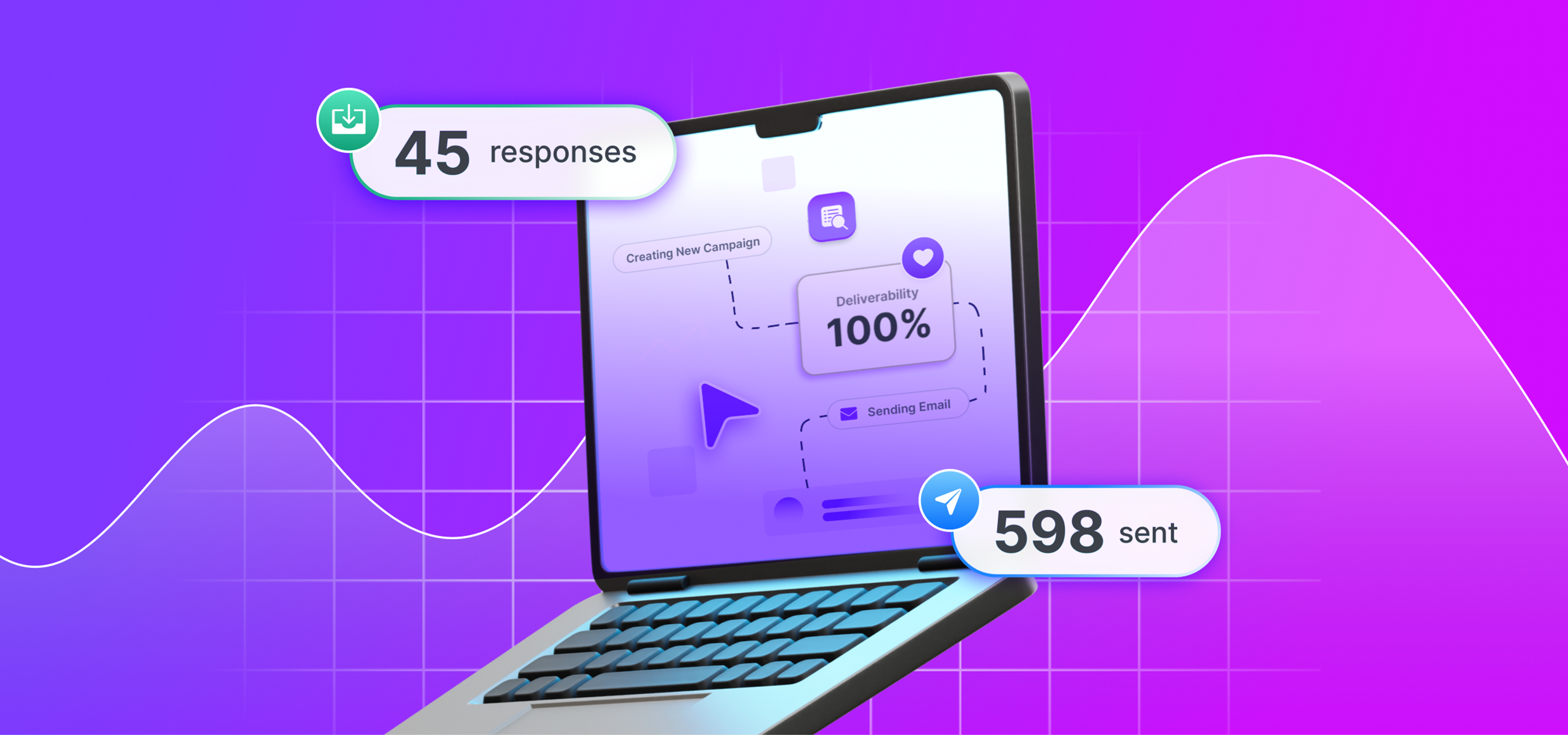
A human SDR sends 50–100 emails a day. An AI SDR sends 500+ in the same time. Each one personalized. 60–85% cheaper than human labor, and response time drops from hours to under 1 minute.
What is this?
An AI SDR (Sales Development Representative) is a tool where an AI agent takes over the repetitive tasks of a sales development rep. Lead sourcing, initial outreach, follow-ups, meeting scheduling — everything a human SDR does all day, AI handles 24/7 nonstop.
Email automation tools existed before, right? Things like Mailchimp or HubSpot sequences. But those were at the level of "sending the same template to multiple people." AI SDRs are on a different level. They analyze prospects' LinkedIn profiles, company news, and job postings to write a different message for each person.
The market is exploding. 11x.ai hit a $350M valuation, and players like Artisan, AiSDR, and Regie.ai are growing fast. As of 2025, 80% of sales teams are already using AI in some form, and 30% of outbound messages are AI-generated.
Here's how it works in a nutshell:
- Lead sourcing
Automatically finds leads matching your ICP (Ideal Customer Profile) from a database of 300M+ contacts. - Research & personalization
Analyzes each lead's LinkedIn activity, company news, and tech stack to generate tailored messages. - Multi-channel sequences
Automatically executes sequences combining email, LinkedIn DMs, and phone calls. - Automated follow-ups
If there's no reply, automatically re-contacts with adjusted timing and content. - Meeting booking
Connects calendars with interested leads to directly schedule meetings.
What changes?
Human SDR vs AI SDR — the numbers make the difference clear.
| Human SDR | AI SDR | |
|---|---|---|
| Daily outreach | 50–100 messages | 500–1,000+ messages |
| Annual cost | $75,000–$110,000 (salary + benefits) | $15,000–$35,000 |
| Cost per lead | $262 | $39 (85% savings) |
| Response speed | 2–4 hours | Under 1 minute |
| Operating hours | 40 hrs/week | 24/7 nonstop |
| Onboarding time | 3–6 months | 1–2 weeks |
| Meeting show rate | 70–85% | 40–60% (weakness) |
The numbers look overwhelming for AI SDRs, but honestly, there are weaknesses too. The meeting show rate for human-booked meetings is still higher. AI-booked meetings show 40–60%, while human-booked ones hit 70–85%. The reason is simple — humans build trust through conversation, but AI can't create that level of rapport yet.
That's why the best-performing model right now is hybrid — AI handles the volume while humans focus on relationship building with high-value leads. Teams using this combo are reporting 40% conversion rate improvements within 6 months.
The real point of AI SDR adoption
It's not about "replacing" human SDRs — it's about letting them "focus on what matters more." AI sends the initial 500 outreach messages, and humans pick up the 30 that get responses to convert them into deeper conversations. One SDR's pipeline grows 10x.
Here are the major tools organized by price range:
| Tool | Price range | Key features | Best for |
|---|---|---|---|
| Instantly | $30–$286/mo | Cold email focused, unlimited accounts, built-in warmup | Early-stage startups |
| Jason AI (Reply.io) | $49–$166/mo | Multi-channel, AI research, website chatbot included | Small-mid sales teams |
| AiSDR | $900/mo+ | 700M+ contact DB, email + LinkedIn, GTM support | Growth-stage B2B teams |
| Salesforce Agentforce | $2/conversation | CRM-native, full Salesforce ecosystem integration | Salesforce users |
| Artisan (Ava) | ~$2,400–$7,200/mo | 300M+ DB, brand voice learning, white-glove onboarding | Enterprise |
| 11x.ai (Alice) | ~$5,000–$10,000/mo | Fully autonomous agent, multi-channel sequences | Large sales orgs |
The essentials: how to start with AI SDR
- Start with ICP definition
AI SDRs perform better when the target is crystal clear. Define your ideal customer profile specifically: industry, company size, job title, tech stack, etc. - Choose your tool — match budget and scale
The spectrum ranges from $30/mo (Instantly) to $10,000/mo (11x.ai). If you only need email, Instantly works. For multi-channel, AiSDR or Reply.io are good starting points. - CRM integration is a must
Always connect to your existing CRM like HubSpot or Salesforce. Lead data from the AI SDR needs to flow automatically into the CRM so the sales team can pick up immediately. - Small test → scale up
Don't unleash it on your entire lead database from day one. Run A/B tests with 100–200 leads, check response rates and meeting conversion rates, then increase volume. - Design the handoff process with human SDRs
Set clear criteria for when humans take over AI-booked meetings. Handing off based on intent signals (3+ email opens, link clicks, etc.) improves show rates.
Check before adopting
AI SDRs are heavily dependent on data quality. If your ICP is unclear or contact data is outdated, even the best tool will feel like spam. Also, make sure to verify GDPR and privacy law compliance — automated mass outreach carries regulatory risk.